


Where Glioma Research Is Actually Moving Forward
Glioblastoma (GBM) is the most common and most aggressive member of the glioma family and remains one of the most treatment-resistant cancers in oncology. The World Health Organization classifies it as an IDH-wildtype, CNS WHO grade 4 astrocytic tumors, and despite refinements in diagnostic accuracy, five-year survival remains below 10%. What has changed over the past year is not the underlying biology, but where real clinical progress is concentrated across the glioma family — and it is narrower, and more specific, than a general appeal to “innovation” suggests.
Approved Treatment Options
A handful of therapies are approved specifically for glioblastoma and the broader glioma family today:
- Temozolomide (Temodar): approved for newly diagnosed GBM and the backbone of first-line therapy.
- Bevacizumab (Avastin): conditionally approved for recurrent GBM.
- Carmustine/Lomustine: approved for glioma, most often used in low-grade glioma and recurrent GBM.
- Tumour Treating Fields (Optune): approved for both newly diagnosed and recurrent GBM, delivered via a wearable device following chemoradiation.
- Everolimus (Afinitor): approved for subependymal giant cell astrocytoma in patients with tuberous sclerosis.
- Dabrafenib plus trametinib (Tafinlar plus Mekinist): approved for BRAF V600E-mutant glioma, primarily in the pediatric and low-grade setting.
- Vorasidenib (Voranigo): approved for IDH-mutant grade 2 diffuse glioma — a different molecular category than glioblastoma, but a meaningful option across the broader glioma family.
- Tovorafenib (Ojemda): approved for pediatric low-grade glioma with BRAF alterations.
Notably, most of the newest approvals target molecularly defined glioma subtypes rather than IDH-wildtype glioblastoma itself — a reflection of how far diagnosis and treatment selection have moved toward molecular precision across the glioma family.
Current Trends in Treating GBM
The single most consequential shift in how GBM is diagnosed and treated is not a new drug but a redefinition of the disease itself. Glioblastoma is now a molecular diagnosis, not a histological one: a tumor is classified as glioblastoma only when it is IDH-wildtype (that is, without a mutation in the IDH1 or IDH2 genes).
Tumors that would once have been labelled glioblastoma but carry an IDH mutation are now classified separately, as astrocytoma, IDH-mutant — a different disease with a meaningfully different prognosis. Conversely, some tumors that would previously have been graded lower are now classified as glioblastoma based on molecular features alone — TERT promoter mutation, EGFR amplification, or a +7/–10 chromosomal pattern — even without the classic histological hallmarks.
Practically, this means molecular confirmation, not imaging or histology alone, is now the starting point of the GBM patient pathway, and it directly shapes trial eligibility criteria and how new results compare with older data.
MGMT promoter methylation status remains the key predictive biomarker for response to temozolomide and continues to stratify both standard-of-care decisions and trial design. On the imaging side, response assessment is increasingly conducted against the updated RANO 2.0 criteria, which sponsors and CROs need to build into central imaging review charters and site training from the outset rather than retrofit later. Taken together, these shifts mean biomarker turnaround time and imaging standardization now function as rate-limiting steps in trial enrolment, not background administrative processes.
Where Systemic Therapy Has Stalled, and Where It Hasn’t
It is worth being direct about a widely marketed therapy that recently had its moment of truth. Tumor Treating Fields, delivered via a wearable device following chemoradiation, has been an approved part of newly diagnosed GBM care for a decade. Its most significant recent trial tested whether starting the therapy earlier — concurrent with chemoradiation rather than afterward — would extend survival. Topline results reported in mid-2026 showed no statistically significant improvement in overall survival between the two approaches. That result matters for how this therapy should be described going forward: established and still standard of care, but not a source of new momentum.
Where real movement is occurring is in three narrower areas. First, localized and device-based delivery: alpha-radiation seeds placed directly into inoperable, recurrent tumor tissue produced encouraging early interim safety and response data in a small feasibility trial, prompting regulators to authorize continued enrolment.
Second, molecularly stratified immunotherapy: a personalized neoantigen vaccine is now in early-phase testing specifically in the hardest-to-treat, MGMT-unmethylated patient population, and a checkpoint-inhibitor combination is being tested perioperatively — before and after surgery — rather than only after progression.
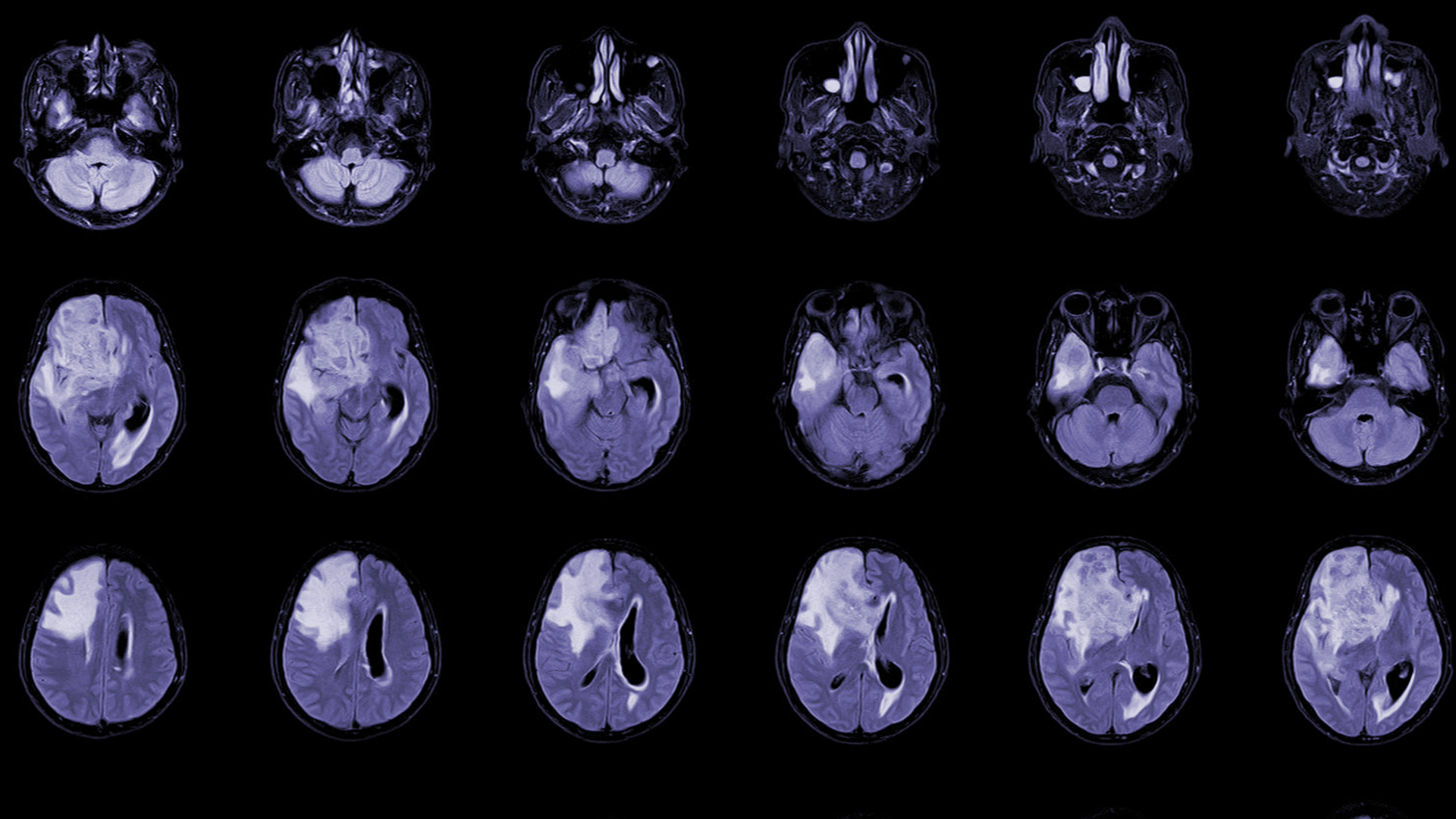
Third, imaging-driven trial design: distinguishing genuine tumor progression from treatment-related pseudo-progression remains a persistent diagnostic problem, and radiopharmaceutical imaging tools are increasingly built into trial eligibility and monitoring rather than treated as a separate diagnostic question.
None of this changes the underlying reality that GBM remains difficult to treat and that most systemic drug approaches have failed to move survival meaningfully. But it does mean that the operationally relevant skills for GBM trials right now are less about running another large randomized drug study and more about handling localized delivery logistics, molecular and imaging-based patient selection, and adaptive designs built around a rapidly progressing disease.
Products in Development and Market Scale
Development activity in glioblastoma remains substantial: current pipeline tracking shows more than 200 companies advancing over 220 products in development for glioblastoma, spanning discovery through late-stage clinical programs. That breadth reflects an indication that remains, despite a decade of largely negative Phase III drug readouts, considered worth the investment — driven by a persistently poor prognosis and a treatment landscape still built around a small number of approved options.
Market Financials
Independent market-research estimates for the glioblastoma treatment market vary meaningfully depending on scope and methodology, so a range is more honest than a single figure. Current 2026 market-size estimates run from roughly $2.1 billion to $4.65 billion, with forecast compound annual growth rates ranging from approximately 6.75% to 13.2% depending on the vendor and whether Tumor Treating Fields devices are included in scope.
Device-based therapy is projected as the fastest-growing treatment modality by CAGR across nearly every estimate — notably in tension with Tumor Treating Fields’ own mid-2026 trial result described above. Total incident GBM cases across the seven major pharmaceutical markets (the US, EU4, UK and Japan) were approximately 38,000 in 2025, with continued growth expected as diagnostic capability improves.
What This Requires Operationally
GBM trials place unusual operational demands on a CRO. Patients can deteriorate quickly, so screening and site activation timelines matter more than in most oncology indications. Device-based and localized-delivery therapies require site-level procedural coordination that a standard drug trial does not. Imaging must be standardized and centrally reviewed to distinguish progression from pseudo-progression with any consistency. And because eligibility increasingly depends on molecular subtype — MGMT methylation status foremost among them — biomarker turnaround time is now a rate-limiting step in enrolment, not a background process.
HiRO’s Glioma and Glioblastoma Experience
The below reflects a sampling glioblastoma and brain tumor engagements captured in HiRO’s business history. HiRO’s senior clinical safety leadership has personally been part of multiple GBM regulatory approvals earlier in their careers, and senior operational leadership brings direct experience managing late-stage programs through to a final no-go decision before approval. That second kind of experience, knowing when a GBM asset will not clear the bar as much as knowing how to run the trial that does, does not show up in a project log, but it shapes how a trial is run in practice.
Product types include cytotoxic, targeted small-molecule, localized device-based delivery, an implanted chemotherapy wafer, nucleic-acid immunotherapy, nutrient-based, cell therapy, and imaging/diagnostic modalities, across early- and later-phase programs, several of them active today. HiRO’s numbers reflect only the design, delivery and oversight it directly performed projects, coordinating with specialist laboratory and imaging partners as each trial required. For a global CRO of roughly 550 people, without owned lab or imaging infrastructure to pad the count, that is a meaningfully deep and current body of glioblastoma-specific experience on its own terms.
| Modality | Phase |
| Cytotoxic chemotherapy, recurrent glioma | II |
| Targeted small molecule, first-in-human, solid tumor/GBM | I |
| Localized drug-delivery device, implanted at the resection margin | II |
| Implanted chemotherapy wafer, surgical placement | II |
| Nucleic-acid immunotherapy (vaccine), newly diagnosed GBM | I |
| High-dose nutrient-based therapy administered pre-resection and as ongoing treatment | II |
| Targeted small molecule, novel intracellular target | II/III |
| Cell therapy (CAR-T), multi-tumor long-term follow-up including recurrent/refractory GBM | II |
| PI3K/mTOR-pathway inhibitor, recurrent GBM | I/II |
| Imaging/diagnostic radiopharmaceutical, tumor vs. treatment-effect differentiation | III |
A representative sampling of HiRO’s documented glioblastoma and brain tumor experience, by modality and phase; not a complete inventory of relevant organizational or team experience.
Two of these programs are worth highlighting as current, not historical. The localized drug-delivery device engagement — chemotherapy implanted directly at the tumor resection margin — has UK regulatory approval in hand, with sites now opening, while a corresponding US IND filing is under way in parallel. That combination of an active approved regulatory pathway in one major market and a live filing in another, on the same asset, at the same time, is precisely the kind of concurrent multi-region regulatory capability that biomarker- and device-driven neuro-oncology trials increasingly require. Separately, the nucleic-acid immunotherapy program in newly diagnosed, MGMT-unmethylated GBM is now in successful close-out — a complete, well-managed run of a complex biologic trial from first-in-human dosing through to conclusion, which is its own form of relevant experience distinct from simply having started a trial.
Positioned for What Glioma Trials Now Demand
Taken together, this experience maps closely onto where glioma-family clinical development is actually headed: localized and device-based delivery requiring site-level procedural coordination; molecularly and radiographically driven patient selection; and the regulatory fluency to run the same asset through parallel approval pathways in different markets at the same time. It is also, notably, imaging heavy. A third of the documented programs above are imaging or diagnostic in nature, spanning radiopharmaceutical, fluorescence and contrast-agent modalities. That is not incidental. It is a direct match to the diagnostic problem named earlier in this piece: distinguishing genuine progression from treatment-related pseudo-progression and building imaging into eligibility and monitoring rather than treating it as a separate question. HiRO’s current active engagements sit inside exactly that operating model, not adjacent to it.
About HiRO
Harvest Integrated Research Organization (HiRO) is a modern, full-service global CRO founded in 2020 and built through targeted regional acquisitions, including PharmaSols in Australia and New Zealand, and Courante Oncology and DeltaMed Solutions in the United States, alongside its established APAC, European, and Shanghai-based operations. That structure allows a single asset to run concurrently through distinct regulatory pathways in different regions, and it underpins HiRO’s continuing work in rare and hard-to-treat oncology indications.
HiRO’s neuro-oncology depth traces back further than the company’s own founding date. A core of HiRO’s clinical, medical, and regulatory talent came together through the integration of Cmed, whose team spent over a decade building specific expertise in glioblastoma and CNS trial design before joining HiRO. That lineage is part of why the experience described above runs deeper than a five-year-old CRO’s project log alone would suggest.
For sponsors evaluating where to run the next generation of neuro-oncology trials, including localized delivery, molecularly stratified immunotherapy, and imaging-driven designs, HiRO’s combination of active, current glioblastoma engagements and multi-region regulatory experience is a Statement of Experience worth putting in front of a selection committee.